Electronic & Electrical Engineer  ·  Robotics & Embedded Systems  ·  Ibadan, Nigeria

Salimat
Akinwande

Building systems that work in the real world, at the point where power engineering meets robotics and IoT.

4.51 CGPA / 5.00
Top 3 of 147 graduates
1st Class Honours
5+ Built Projects

01 About

Bio & Background

I studied Electronic and Electrical Engineering at LAUTECH and graduated with First Class Honours, finishing in the top three of my class. Power systems was what I knew, it was what I studied, and for a long time it was where I expected to stay.

Then I got admitted into RAIN and started working with robots. Not reading about them, actually building them. That changed things.

I am not going to pretend I have it all figured out, because I do not. But I know that the work I am doing now — getting a machine to balance itself, building a system that cleans a solar panel with the press of a button, fabricating a conveyor that moves a bottle through a filling line — that is the kind of engineering that keeps me up at night in the good way.

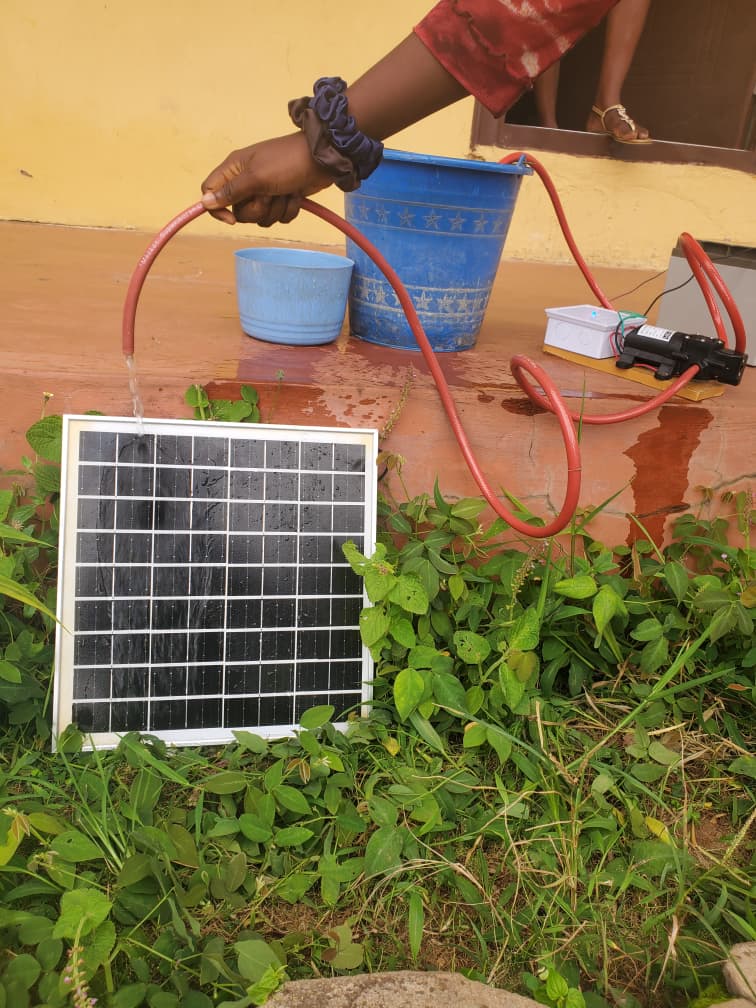
My final year project started from a simple observation. In Nigeria, we deal with power issues by going solar. Solar panels get dusty. People climb rooftops to clean them, sometimes getting hurt in the process. Robotic arms can scratch the panel surface. So I designed an IoT-controlled water spray system that cleans panels automatically from a mobile app. Testing showed a 40% improvement in efficiency compared to uncleaned panels. The problem was not complicated. The solution was not complicated. What mattered was that someone actually built it.

I am currently at RAIN deepening my work in embedded systems and autonomous systems. I am looking for postgraduate opportunities where I can keep building on what I have started and eventually bring something back that is actually useful in Nigeria, where the infrastructure problems are real and most of the engineering solutions are still waiting to be built.
02 Research Interests

Academic Focus
R — 01

Automated Monitoring for Energy Infrastructure

I come from power systems, so I know what it looks like when things fail and someone has to physically go and check why. My solar panel project made me think about how much of that work could be done remotely. I am interested in IoT and robotic systems that can monitor, maintain, and respond to faults in energy infrastructure — solar farms, substations, distribution networks — without putting a person in a dangerous place to do it.

R — 02

Assistive Robotics and Physical Support Systems

The more I build, the more I think about who a robot could actually help. I am interested in systems designed to support people with physical limitations — whether that is a device that extends someone's reach and strength, or something that assists with movement or rehabilitation. This is early for me and I will not pretend otherwise. But it is the direction I find myself thinking in when I think about what I want the work to eventually mean.

R — 03

Robotics Under Real-World Constraints

Most robotics research assumes a controlled lab environment — reliable power, clean surfaces, standard parts available on next-day delivery. Nigeria does not look like that, and neither do most of the places where this technology would actually matter. I am interested in building systems that work under those conditions. Constrained power, limited connectivity, improvised materials. When my barcode module was unavailable I switched to RFID and it worked better anyway. I want to take that kind of thinking further, systematically.

03 Projects

Engineering Work
Final Year Project 2025

IoT Automated Solar Panel Cleaning System

The idea came from a real problem. In Nigeria, solar is the practical answer to an unreliable grid. But panels get dusty, and cleaning them means someone has to climb the roof — which leads to injuries. Robotic arms scratch the surface. So I built an IoT-controlled water spray mechanism that cleans the panels from a mobile app. You press a button and the pump runs. Testing confirmed a 40% increase in photovoltaic efficiency compared to uncleaned panels. The manuscript has been co-authored with three supervisors and is currently under journal review.

ESP32IoTMobile App Control Renewable EnergyC++Water Pump

System Overview

MCUESP32
InterfaceMobile Application
ActuatorWater Pump
ProtocolWiFi / IoT
Result+40% PV Efficiency
StatusUnder Journal Review
Personal Project 2025 — Ongoing

Self-Balancing Robot — PID Control System

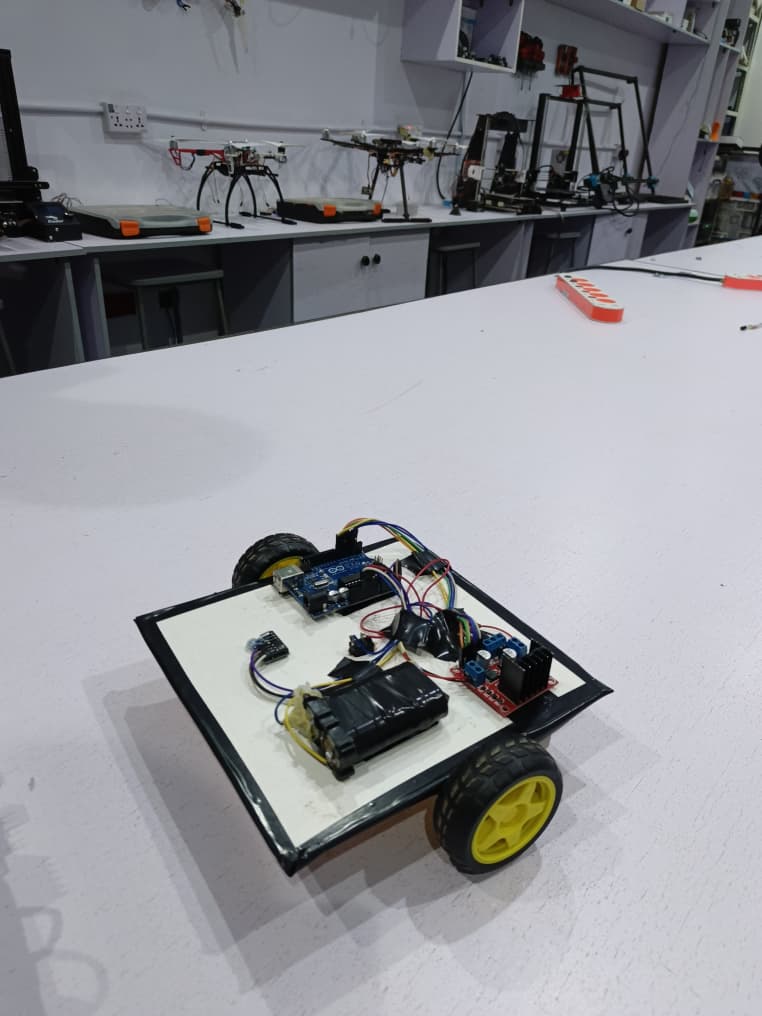
A two-wheeled robot that keeps itself upright using PID control. The MPU6050 reads tilt data via I2C and feeds the Arduino Uno roughly 100 times per second. The controller works out how far the robot has leaned and how fast it is falling, then adjusts motor speeds through the L298N driver to correct before it tips. The robot works. I learned the initial PID logic from a colleague's working version — but I am now going through the parameters methodically, trying to understand how varying Kp and Kd changes how aggressively the system corrects error, and how motor response speed connects to balance stability. That process has been a better control systems education than the lectures were.

Arduino UnoMPU6050L298N PID ControlC++I2C

System Architecture

MCUArduino Uno
SensorMPU6050 via I2C
AlgorithmPID at ~100Hz
DriverL298N via PWM
Power2x 3.7V 2000mAh
FramePlywood
RAIN — Semester Project 2025

Smart Shopping Cart and Billing System

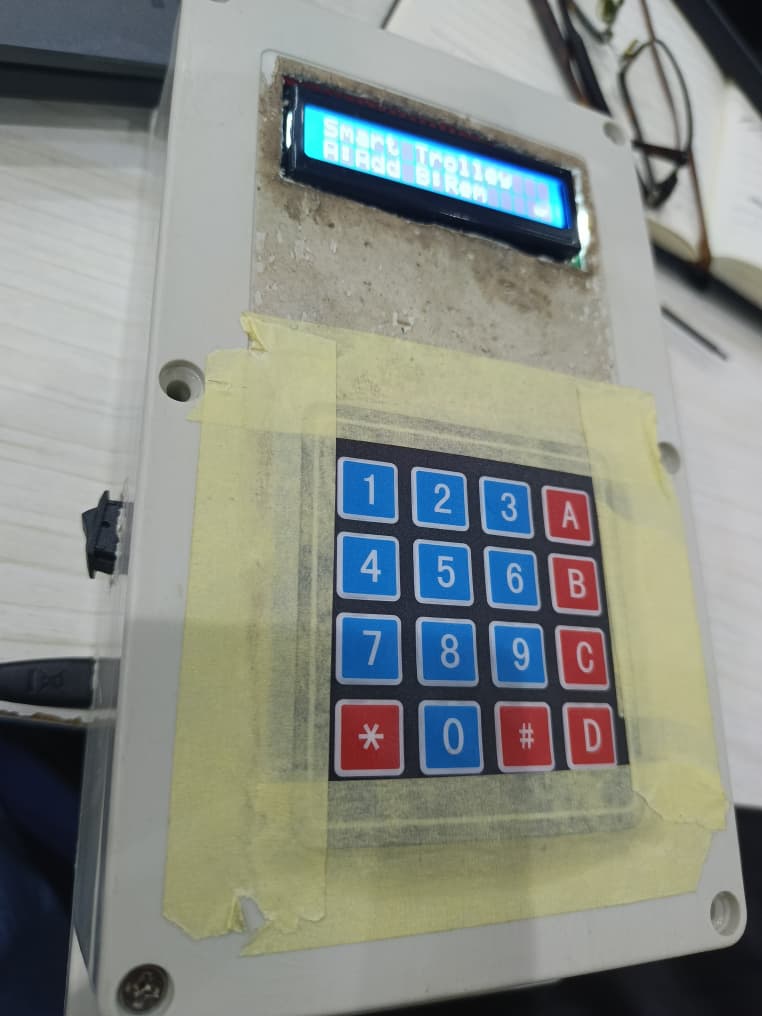
My first semester project at RAIN. The original plan was to use a barcode reader, but barcode modules are genuinely difficult to source in Nigeria, so I switched to RFID. The ESP32 reads each tag as items are placed in the cart and generates a running digital bill in real time. It worked at the demo. The constraint that forced me to change approach ended up being a better fit for the environment I was building in anyway.

ESP32RFIDC++ IoTReal-time Billing

System Overview

MCUESP32
DetectionRFID Tags
OutputDigital Bill
Original PlanBarcode (unavailable)
StatusDemoed at RAIN
Group Project — RAIN 2025

Automated Bottling System — Custom Fabricated Mechatronic System

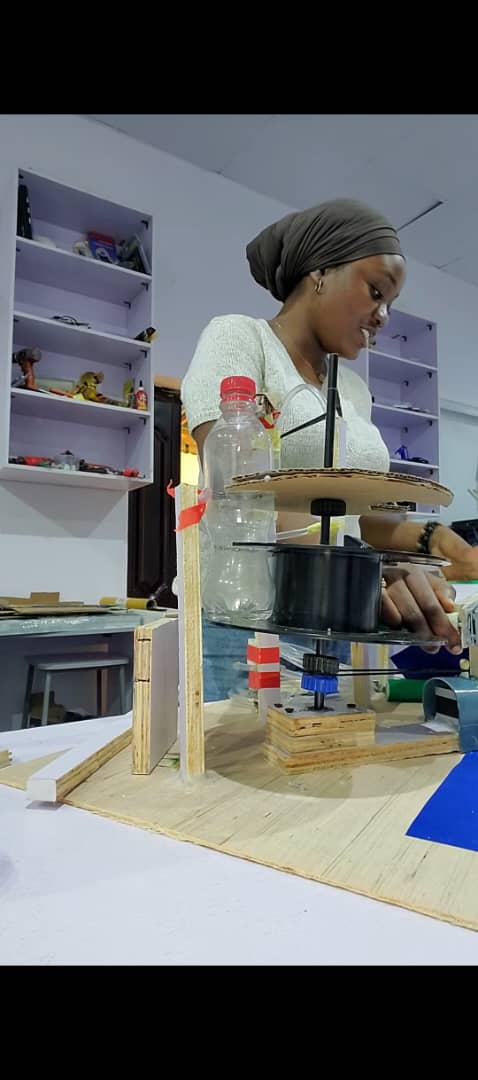
Most of this project was fabrication, and that was where I was most involved. The conveyor system was built from plywood, pipes, and bearings. The rotation stage used two layers of 3D-printed components to move each bottle into position under the filling nozzle. Once there, a pump fills the bottle, then it moves to a capping station and out into the collection tray. The full mechanical sequence was walked through and each stage functioned. The code integration was still in progress at the time of review. Building the physical system from raw materials — cutting the wood, fitting the pipes, getting each stage to actually do what it was supposed to — that was the work, and it was done.

FabricationStepper Motors3D Printing PlywoodMechatronicsConveyor System

Production Sequence

Stage 1Conveyor advances bottle
Stage 2Rotation aligns to nozzle
Stage 3Pump fills bottle
Stage 4Capping station
BodyPlywood, pipes, bearings
Rotation3D-printed, 2 layers

Other Builds

Along the way
Group — RAIN 2025

Height Measuring System

ESP32 reads distance from an ultrasonic sensor and converts it to a height measurement. Results published over MQTT for remote monitoring on the same network.

ESP32UltrasonicMQTT
LAUTECH SWEP 2023

2.5kVA Solar-Powered Inverter

Designed and built a functional 2.5kVA inverter system to support departmental lab operations, alongside a transistor-based signal generator. Full circuit schematics documented.

Power ElectronicsProteusSolar
Personal Ongoing

More Coming

Projects are ongoing and this page will be updated as they are documented. If you want to know what I am working on right now, just ask.

Embedded SystemsRoboticsIoT

04 Skills

Technical Stack

Microcontrollers & Hardware

  • Arduino (Uno, Nano)
  • ESP32
  • Raspberry Pi Pico
  • MPU6050 (IMU)
  • L298N Motor Driver
  • HC-SR04 Ultrasonic
  • RFID Modules
  • Servo & Stepper Motors

Programming

  • C++ / Arduino IDE
  • Python
  • MicroPython
  • ROS2 — in progress

IoT & Protocols

  • MQTT (HiveMQ)
  • I2C / SPI / UART
  • WiFi-based IoT
  • Blynk Platform
  • HTTP / REST APIs

Control & Robotics

  • PID Control Theory
  • Sensor Fusion (IMU)
  • PWM Motor Control
  • Forward Kinematics — in progress
  • Autonomous Navigation — in progress

Design & Fabrication

  • Circuit Design & Prototyping
  • Proteus Simulation
  • Fusion 360 / CAD
  • 3D Printing
  • Hardware Troubleshooting

Power Systems

  • Power Systems Operations
  • 132kV / 330kV Substations
  • Transformer & CB Maintenance
  • Renewable Energy Systems
  • Omicron CT Analyzer

05 Postgraduate

What I am Looking For

I am actively looking for Masters and PhD programs in robotics, embedded systems, or smart energy systems. I do not have a thesis topic locked down yet, and I am not going to pretend I do.

What I do have is five years of power systems knowledge, a growing foundation in robotics and IoT through RAIN, and a genuine interest in problems that sit where those two areas touch. Particularly in contexts like Nigeria, where the infrastructure challenges are real, the constraints are different from what a textbook assumes, and the engineering solutions are mostly still waiting to be built.

I want to work with a supervisor who takes hardware seriously, not just simulation. I want to be in a lab where things get built and tested, not only modelled. And when I am done, I want to do something with it here.

I am open to any country. Funding matters. The work matters more.

01 Pursue a funded Masters or PhD in robotics or embedded systems
02 Work on research that touches real infrastructure problems
03 Build more complex autonomous systems from the ground up
04 Publish research that is useful, not just citeable
05 Come back and build something in Nigeria that lasts

06 Awards

Recognition
Year Award Type
2025
Best Female Graduating Student — Dept. of EEE
Ladoke Akintola University of Technology
Academic
2025
Academic Excellence Award — Dept. of EEE
Ladoke Akintola University of Technology
Academic
2025
Award of Honor — Electronic and Electrical Engineering
Ladoke Akintola University of Technology
Academic
2021
Best Female Engineering Student
Association of Professional Women in Engineering (APWEN), LAUTECH
Award
2021
Merit Award — Best Muslim Student
LAUTECH Muslim Graduate Association (LAUMGA)
Award

07 Contact

Get in Touch

Open to research, collaboration, and new opportunities.

If you are working on something in robotics or embedded systems, thinking about a collaboration, looking for a researcher, or you just want to talk about what I have been building — reach out. I will get back to you.

Message sent. I will get back to you shortly.